Barista milk contains more protein and more fat than normal milk, which means that it forms more stable foam and has a creamier texture when steamed. Although regular milk is suitable for drinking and use in cooking, it is more likely to split or to produce a thin foam that doesn’t last when the milk is heated in a coffee machine.
For cafés, hotels or any other kind of retail business which serves coffee, this difference is evident in each cup and has an impact on consistency, waste and customer satisfaction when viewed on a large scale.
What is barista milk?
Barista milk is designed to perform well with espresso machines. Its protein and fat content is higher than standard milk, and that changes how it behaves when steamed.
When it is heated, the proteins in milk unfold and stick to the air bubbles to form foam. The more protein there is, the stronger the bonds, which causes the foam to maintain its shape for a longer time and allow it to be poured without breaking when making latte art. The additional fat gives the milk body and a creamier mouthfeel that remains in the drink rather than disappearing.
Barista milk isn’t a separate dairy category. It’s standard cow’s milk, whole or semi-skimmed, tuned for the coffee machine rather than the breakfast table. The same principle applies to barista-style plant milks such as oat, soya, almond, and coconut: they’re adjusted to froth and steam similarly to dairy.
Barista milk vs regular milk: The key differences
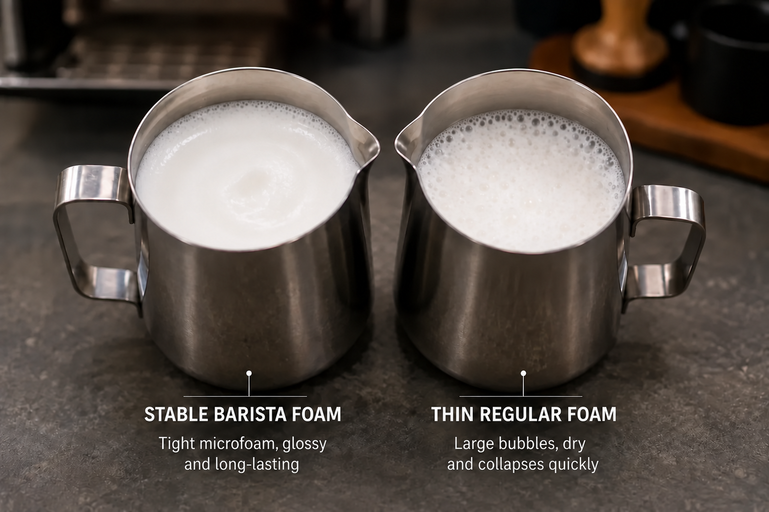
The result in practice is that there are fewer instances of failed pours and the drink comes out more consistently, regardless of whether it is prepared by an experienced barista or by a member of staff who is still learning how to use the machine.
Is barista milk the same as whole milk?
Barista milk comes in both whole and semi-skimmed formats, so the answer depends on the product rather than the barista label itself. Freshways stocks both as 2 litre barista whole milk and 2 litre barista semi milk in poly bottles, alongside barista plant milks from Alpro and Oatly for businesses that also need a dairy-free option on the counter.
Whole barista milk gives the richest texture and is the closer match to a traditional café pour. Semi-skimmed barista milk holds a comparable foam despite the lower fat content, which suits businesses standardising on a lighter milk across their menu.
What are the benefits of barista milk for a coffee business?
Three real benefits come from choosing barista milk over regular milk in a foodservice or retail operation.
- Consistency. Barista milk behaves predictably when steamed, so drinks made by different staff at different times of day turn out much closer to the same standard. That matters for regular customers and for the brand’s reputation.
- Less waste. Milk that splits or won’t foam gets tipped down the sink and remade, and during a Saturday rush that’s minutes and litres you don’t get back.
- Quality that justifies the price. A flat white lives or dies on the microfoam. Get it wrong, and it’s just hot milk with a shot in it; get it right, and you get the glossy, velvety texture that’s the real difference between paying £3.50 for a coffee and making instant at your desk.
Choosing the right barista milk for your business
The right choice depends on the drinks menu and the customer base. A business serving mostly milky drinks like flat whites and cappuccinos gets the most benefit from whole barista milk, since the extra fat shows up clearly in the finished cup. A business standardising on one milk across a wider range of hot and cold drinks could prefer semi-skimmed barista milk for its lighter profile and comparable foam performance.
Barista-style plant milk, such as Alpro Barista oat, soya, almond or coconut, or Oatly Barista Edition, belongs in shops serving customers with dietary needs or those who prefer plant-based diets, rather than standard plant milk. Standard plant milk hasn’t been adjusted for steaming, so it’s more likely to split in an espresso drink.
Freshways offers dairy and plant-based barista milk in the pack sizes foodservice and retail businesses use, plus a wider range of barista plant milks for companies expanding their dairy-free options. Existing Freshways customers can order online for next-day delivery, and anyone setting up a new account should contact the team to talk through which milk range suits their menu.
Frequently Asked Questions
What is the difference between barista milk and full cream milk?
Full cream milk is the same as whole milk, with the fat left untouched and no difference in how it reacts to steam. Before it gets into the jug, barista milk goes through a different process: the ratio of protein to fat is altered so that the foam forms and stays firm, and the milk can withstand more heat before scalding. Although ordinary whole milk can produce foam if you get the timing right, if you leave it under the steam nozzle for a few extra seconds it will collapse. Barista milk is more tolerant of that extra time, which is the reason it performs better during busy service.
Can I use barista milk as normal milk?
Yes, even though it’s described in that way, it’s still ordinary cow’s milk or plant milk, and so you can use it for drinking, with cereal, or for any other purpose for which you would normally use regular milk. The greater amount of protein and fat causes it to have a slightly creamier taste.
Can I use barista milk for cooking?
Barista milk is used in cooking and baking in the same manner as ordinary milk; the extra fat can be used to give richness to sauces, batters and baked goods, but since cost is a concern in most kitchens, the majority of businesses reserve barista milk for drinks and use regular milk for cooking.