Coconut milk isn’t going to knock oat off the top spot in UK cafes any time soon. But more people are searching for “barista coconut” than ever before, and interest has gone up every year.

Why “barista” makes the difference
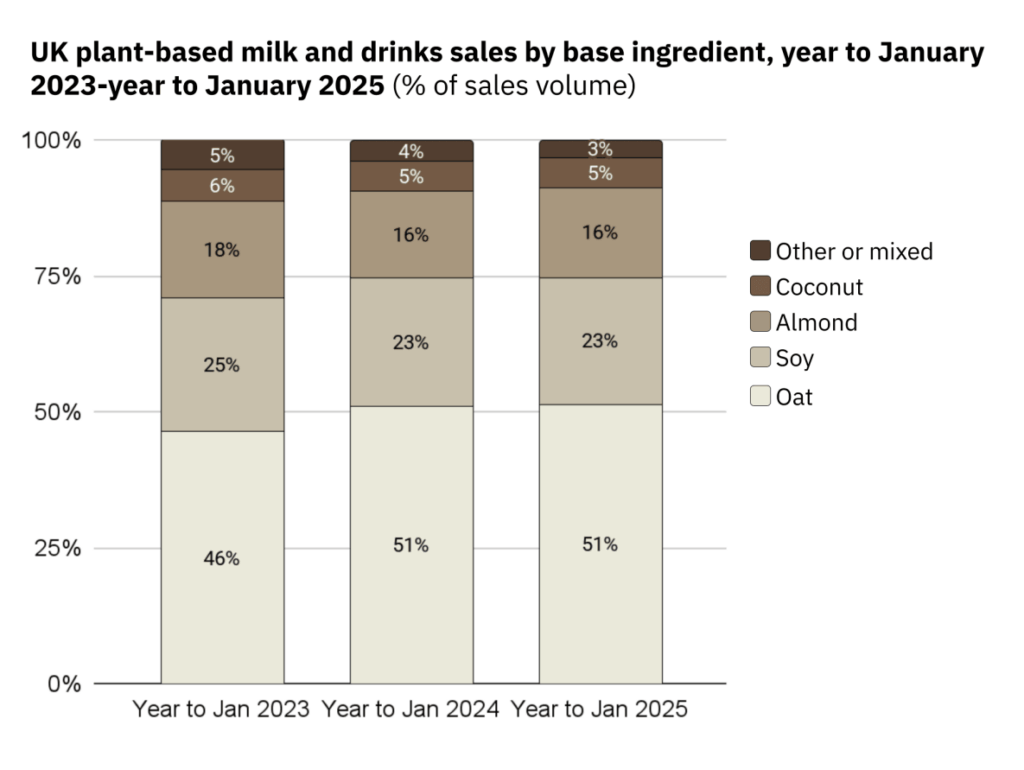
The real opportunity isn’t coconut milk in general, it’s coconut milk made for coffee. Oat still leads the wider plant-based milk category by some distance: GFI Europe’s analysis of Circana data found that oat accounted for over half of UK plant-based milk and drink sales volume in the year to January 2025, with soya at 23% and almond at 16%. Coconut sits in the small remainder, at around 5%. The UK government’s position reflects the same order: a government nutrition review published in July 2025 names oat as the most popular plant-based drink in the UK, followed by soya and almond, and only looked closely at the nutrition of those three.
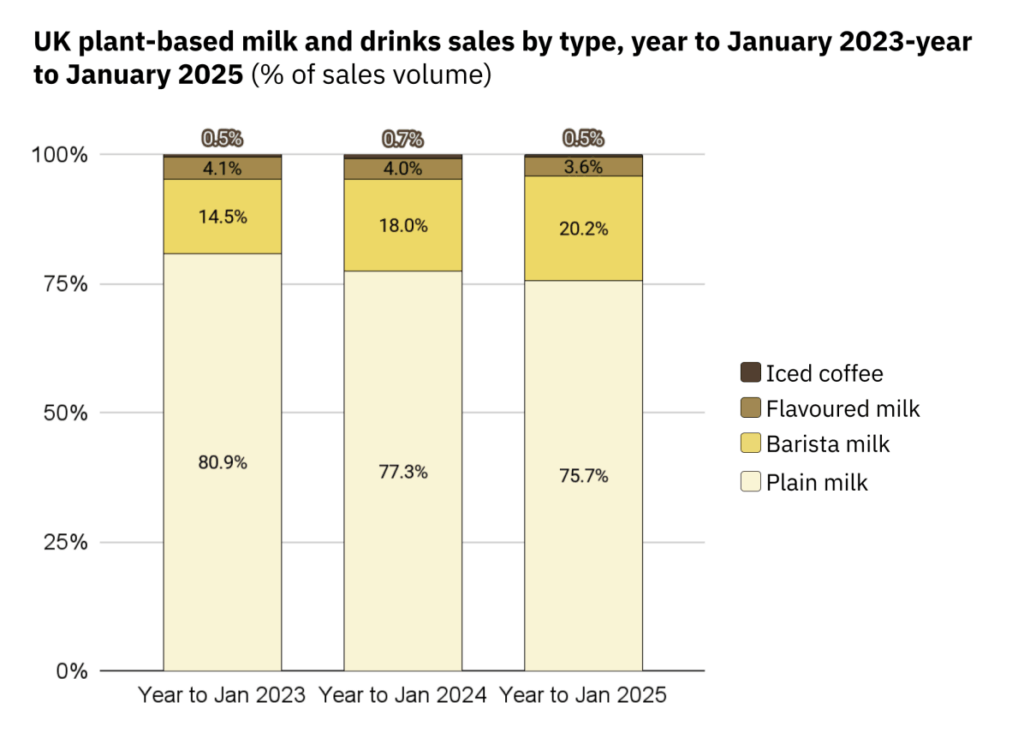
That small share actually works in coconut’s favour. It’s easier to grow from 5% than from over half the market, which is where oat sits. Barista milks are also the fastest-growing part of the plant-based category, both in the amount sold and as a proportion of the market.
GFI Europe reports that UK barista milk volumes rose from 39 million litres in the year to January 2023 to 48 million litres in the year to January 2025, an increase of 25%. That took barista products from roughly 14.5% to 20.2% of plant-based milk and drink sales volume, while the wider category was shrinking.
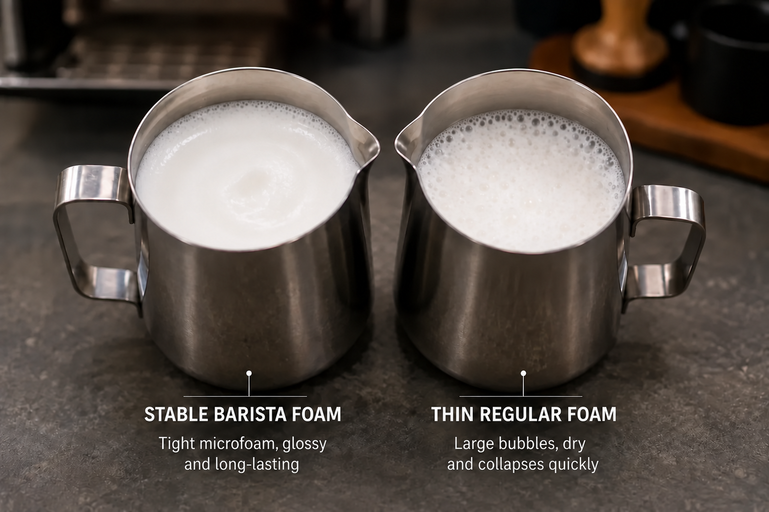
Standard plant milk has not been adjusted for steaming, which is why it is more likely to split when it meets espresso. Freshways covers the mechanics of that difference in barista milk vs regular milk.
So coconut has two things working in its favour at once: people are still moving away from dairy, and the plant milk category is getting better at handling coffee.
What cafés actually need from an alternative milk
Baristas often stop using certain plant-based milks because of what happens at the steam wand. Foam that goes thin partway through texturing. Foam that collapses before the second cup is poured. Taste is rarely the reason.
The practical requirements:
- Steams to temperature without splitting, including when the jug is still warm from the last drink
- Holds its microfoam long enough that the third cup in an order pours as well as the first
- Pours latte art with enough definition to still be visible when the drink reaches the table
- Sits under a hot, acidic espresso without curdling at the edges
- Textures the same way for a weekend barista on their second shift as it does for the head barista
- Behaves identically carton to carton, so nobody re-learns the milk after a delivery
- Carries enough body through to the finished cup that the coffee flavour still comes forward
Dairy milk foams well because its proteins and fats work together to trap air and hold it there. Plant milks are built differently, which is why getting them to foam properly has always been the hard part, and why barista versions exist in the first place.
Coconut is already being used to help other plant milks foam better. Some barista blends mix in coconut cream or coconut milk alongside their main plant base to get a stable, creamy result, without needing as many thickeners or additives. In these products, coconut isn’t just there for taste, it’s doing the work of making the milk perform.
Formulation has moved on quickly. World Barista Champion Dale Harris told BeverageDaily that the industry is moving fast past the era of plant milks that made attractive latte patterns but did not taste good.
Coconut is already on the menu at major UK chains
Coconut is not an unfamiliar option for UK coffee drinkers. Starbucks UK offers coconut alongside oat, soya and almond at no extra cost, and actively promotes pairings such as a mocha made with steamed coconut drink.
Mainstream availability matters because it normalises the ordering habit: choose the drink, choose the size, choose the milk. Coconut’s challenge is not explaining what plant milk is. It is persuading someone to choose coconut instead of their usual oat.

Why cafés are the best place for coconut to grow
Cafés offer plant-milk brands something supermarkets cannot easily replicate: a single-cup trial. Buying a full carton is a commitment, while ordering one coconut flat white costs a customer nothing beyond a coffee they were buying anyway.
UK research by the Oddlygood Group, reported by BeverageDaily, found that 49% of lapsed plant-based drink users and 63% of low users would feel confident ordering a drink containing a plant-based milk in a coffee shop or restaurant. Around one in six people who do not use plant-based drinks at all said they would be open to trying the category in a café.
The same research asked lapsed users which plant-based drinks they would come back to. Oat came first, almond second and coconut third.
For suppliers and operators, that suggests a clear sequence: café trial, then familiarity, then retail purchase.
Where coconut fits on a café menu
Coconut’s strongest opening is probably not the everyday flat white. Its flavour is distinctive, which is a drawback in a drink built around a clean espresso and a potential advantage in sweeter and colder drinks. The applications worth testing first are:
- Iced coffee and cold brew
- Flavoured lattes, particularly caramel, chocolate and spiced recipes
- Matcha
- Tropical and seasonal specials
- More indulgent, dessert-style café drinks
Cold drinks are where the growth is. BeverageDaily reports that Caffè Nero saw 56% growth in cold drink sales year on year in July 2025, and cites Lumina Intelligence’s finding that consumers are more likely to choose a plant-based milk in cold or iced coffee than in a hot drink.
This is a menu opportunity rather than a proven preference. No UK data currently shows that customers prefer coconut in these drinks. What the data shows is that these drinks are growing, and that coconut’s flavour profile suits them.
So is barista coconut milk the next big thing for cafés?
Not yet, and the current evidence does not support saying otherwise. Barista coconut milk is a category worth watching rather than a shift already underway.
Four things point in coconut’s favour:
- Search interest that’s been climbing steadily
- A barista segment growing in both share and volume
- Mainstream availability at chains including Starbucks UK
- Third place among the plant milks that lapsed users say they would return to
Three things do not:
- Oat’s scale
- Coconut’s stronger flavour in traditional espresso drinks
- Limited counter space for a fourth or fifth alternative milk
Nutrition is unresolved too. That same government review concluded that no almond, oat or soya drink sold in the UK is a like-for-like nutritional match for cows’ milk, and it didn’t look at coconut at all.
Freshways supplies dairy barista milk and a range of barista plant milks, including Alpro Coconut Barista, in the pack sizes cafés and foodservice businesses use. Contact the team to talk through which milks suit your menu, or read more on why your business needs milk alternatives.
Frequently Asked Questions
Does barista coconut milk froth as well as oat milk?
Foam performance depends on the specific product rather than the plant it is made from. Barista coconut milk is formulated to steam and hold foam, which standard coconut milk is not. No independent UK comparison currently ranks coconut against oat for foam stability, so cafés should test products on their own machines first.
What is the difference between barista coconut milk and standard coconut milk?
Barista coconut milk is adjusted to perform in a coffee machine, with formulation changes that improve foaming and reduce splitting when the milk meets hot, acidic espresso. Standard coconut milk has not been adjusted for steaming, so it is more likely to separate in an espresso-based drink.
Is coconut milk a good choice for iced coffee?
Coconut milk suits iced and flavoured drinks because its sweetness works alongside cold coffee, matcha and syrup-based recipes rather than competing with a plain espresso. Cold drinks are growing in UK cafés, and BeverageDaily reports that consumers are more likely to choose a plant-based milk in cold coffee.
Which plant milk is most popular in UK cafés?
Oat is the most popular plant-based milk in the UK. GFI Europe found that oat accounted for over half of plant-based milk and drink sales volume in the year to January 2025, and a government nutrition review also names oat as the most popular plant-based drink, followed by soya and almond.